
The Imperative of Education and Training for In-House Medical Staff
Introduction
In the complex world of healthcare, the role of in-house medical staff extends far beyond patient care; they are integral to the financial health of a practice. As the landscape of healthcare billing and administration evolves, so too does the need for ongoing education and training for in-house staff. This article explores the pivotal importance of empowering your team through consistent professional development, particularly for those involved in charting, record-keeping, and billing processes.
With the backdrop of MD Pro Solutions, a seasoned player in medical billing and consulting, we’ll delve into practical techniques practices can implement to enhance their teams’ capabilities and ultimately improve billing outcomes. Understanding how education and training for in-house staff can mitigate errors and enhance productivity is crucial for practices eager to uphold patient care without jeopardizing the revenue cycle.
The case for investing in the continuous education and training for in-house staff is compelling. In a field prone to rapid changes in regulations and best practices, ensuring that your team is well-versed is not just an option; it’s an imperative. This ongoing training equips staff to navigate complexities, minimize errors, and maximize revenue—essential outcomes for any successful medical practice. By focusing on medical coding, billing, and medical claim denial management, you provide your staff with the tools needed to thrive in this challenging environment.
Ongoing Education and Training
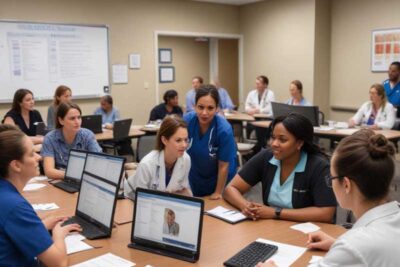
Incorporating regular training sessions into the workflow can be achieved through various formats, such as interactive workshops, online courses, or on-the-job training. This flexibility allows practices to adapt learning opportunities to fit their unique needs while providing an environment that encourages knowledge sharing and collaboration. In particular, online resources have opened new avenues for professional development, allowing staff to learn at their own pace while minimizing interruption to daily operations.
Training programs can cover a diverse range of topics, from the basics of medical billing to advanced strategies in medical claim denial management. By including tailored sessions that focus on specific challenges your practice faces—such as accounts receivable protocols for medical offices—you empower your staff to develop practical skills that directly impact their daily tasks. Engaging in specialized education and training for in-house staff also fosters a sense of empowerment and confidence among staff, who are then well-equipped to tackle the challenges of their roles.
Engaging with certified medical coders and billing experts as trainers can further bolster the education process. These industry professionals bring invaluable insider knowledge about the latest coding standards and regulatory requirements, empowering your team with the skills necessary to navigate the intricacies of healthcare billing with confidence. Furthermore, such training sessions can promote cross-organizational collaboration, enabling different departments to understand the interconnected roles they play in optimizing revenue cycles.
Cultural Shift Towards Continuous Learning
In addition to technical training, fostering a culture of continuous learning can be invaluable. Organizations that prioritize an environment where knowledge is constantly sought and shared inevitably see an increase in employee morale, retention rates, and productivity. This culture can be supported through mentorship programs where seasoned staff guide newer team members, creating strong interpersonal connections that enhance teamwork and collaboration. Such relationships not only facilitate skill transmission but also inculcate a sense of belonging within the practice.
Establishing incentivized learning initiatives that reward staff for pursuing additional qualifications or training milestones creates a motivational atmosphere. A well-implemented rewards program might include financial bonuses, recognition in team meetings, or opportunities for professional development within the organization. By encouraging staff to grow their skill sets, practices cultivate highly skilled teams capable of handling the complexities of medical billing and coding.
Moreover, creating forums for regular discussions surrounding coding, billing challenges, and updates on industry regulations can maintain that momentum of learning between formal education sessions. These informal gatherings encourage sharing best practices, troubleshooting common issues, and brainstorming solutions collectively. The result is a robust network of informed and engaged employees who contribute positively to the financial health of the practice.
The Financial Impact of Staff Training
The outcome of investing in your team’s education and training extends beyond immediate error reduction. By equipping your in-house staff with the tools and knowledge to effectively manage billing and administration, you are setting the stage for greater practice efficiency and improved profitability in the long run. Well-trained staff are crucial in reducing the incidence of medical claim denials, leading to higher collection rates and lower accounts receivable days.
Practices that invest in continuous education and training for in-house staff typically see measurable improvements due to reduced billing errors and streamlined processes. A study cited by the American Medical Association reveals that up to 80% of claim denials stem from clerical errors, which can be significantly mitigated through effective staff training. Ensuring that your team understands medical billing auditing services will not only minimize these errors but also prepare them to navigate complex reimbursement guidelines.
Calculating the return on investment (ROI) for training initiatives is essential. Practices can monitor key performance metrics—such as the reduction in denial rates, improvement in collection timeframes, and overall revenue enhancement—to ascertain the direct impact of education and training for in-house staff. These metrics can help visualize the link between employee development efforts and financial health, reinforcing the notion that investing in human capital yields significant returns.
Strategies for Effective Denial Management
Effective medical claim denial management begins with a solid understanding of why claims are denied in the first place. By training staff to analyze denial reasons and implementing protocols tailored to your practice’s needs, you cultivate a proactive approach to addressing these challenges. Routine audits and reviews of denied claims can help identify patterns that allow for corrective measures before future submissions.
Employing technology in denial management processes can also greatly enhance the efficiency of your operations. Integrating sophisticated software solutions that flag inconsistencies or red flags before claims are submitted can serve as an essential line of defense against denials. Furthermore, providing staff with training on these tools ensures that they are prepared to leverage technology effectively, driving robust and streamlined workflows for claims management.
Optimizing communication between billing staff and healthcare providers is equally important in mitigating denials. Regular collaboration allows for immediate clarifications on any uncertainties during the billing process. Training staff to ensure accuracy in medical coding and documentation can reduce the incidences of incorrect coding, which is a common reason for claim denials. By fostering a spirit of teamwork across departments, practices can create seamless communication channels that enhance overall efficiency.
Implementing Structured Accounts Receivable Protocols
Strong accounts receivable protocols for medical offices begin with understanding the lifecycle of a claim from submission to collection. Training your in-house staff on the various phases of accounts receivable will improve their grasp of how to expedite payments and prevent issues from arising. Systematic follow-up on claims can significantly decrease the amount of time claims stay outstanding, bolstering cash flow and enhancing practice stability.
Implementing structured workflows around the accounts receivable process may also involve regular audits to assess the effectiveness of current protocols. By examining aging reports and outstanding balances, staff can identify which claims require immediate attention and develop strategies to follow up accordingly. Training sessions that include case studies of successful accounts receivable protocols for medical offices can provide tangible examples and enhance understanding.
Moreover, educating the team on the nuances of insurance payment structures, patient payment plans, and regulatory compliance related to accounts receivable can empower them to navigate the complexities of revenue collection with ease. This not only positions them as knowledgeable assets within the practice but also gives them direct accountability over their roles in influencing the financial outcomes of the practice.
Conclusion
In conclusion, the commitment to ongoing education and training for in-house medical staff is a foundational pillar for any healthcare practice focused on efficiency and financial health. MD Pro Solutions exemplifies the advantages that can stem from empowering your teams with the knowledge and skills they need to excel in their roles. By prioritizing education and training for in-house staff, practices can reduce errors, enhance billing outcomes, and secure their place in an ever-evolving industry. Investing in your team’s development is not just an operational strategy—it is a promise of future success, paving the way for a more sustainable, profitable healthcare operation.
Embrace the opportunity to enhance your practice through professional development. For a consultation or to learn more about how our medical billing auditing services can elevate your practice, contact MD Pro Solutions today.
If you would like further information or advice, don’t hesitate to call us at (800) 853-8110 or email us at any time!